Search
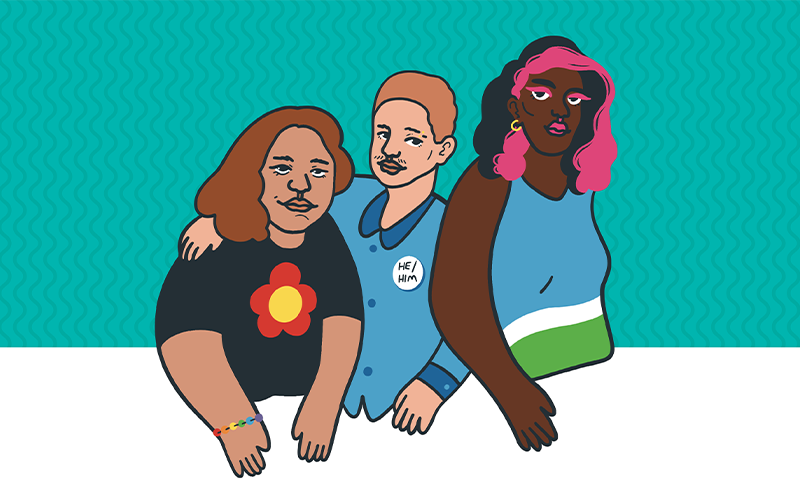
Trans and gender diverse (trans) young people experience higher rates of physical and mental ill-health due to chronic exposure to gender minority stress. Consequently, trans young people report higher health and mental healthcare service utilisation. Disconcertingly, negative experiences of healthcare services are prevalent among trans young people, especially those with additional marginalised identities and backgrounds who experience multiple forms of marginalisation.
Mental ill-health, substance use and their co-occurrence among sexuality diverse young people during earlier adolescence is relatively understudied. The preventive utility of positive school climate for sexuality diverse adolescents' mental health is also unclear, as well as the role of teachers in conferring this benefit.
Family carers of youth recovering from early psychosis experience significant stress; however, access to effective family interventions is poor. Digital interventions provide a promising solution.
Up to one-third of young people live with chronic physical conditions (eg, diabetes, asthma, and autoimmune disease) that frequently involve recurrent pain, fatigue, activity limitations, stigma, and isolation.
Although school-based delivery of online interventions can effectively prevent depression and other common mental disorders, little is known about the characteristics of students who engage with these programs. This study aimed to identify predictors of two indicators of adolescent engagement (program usage and skill enactment) with a school-based online depression prevention program. The study also explored the association between skill enactment and mental health outcomes.
The social media application TikTok allows users to view and upload short-form videos. Recent evidence suggests it has significant potential for both industry and health promoters to influence public health behaviours. This protocol describes a standardised, replicable process for investigations that can be tailored to various areas of research interest, allowing comparison of content and features across public health topics.
Individuals with borderline personality disorder (BPD) are at a substantial risk of harm to themselves and others, experience high levels of functional impairment and typically are high users of tertiary healthcare to address their mental health concerns. As indicators for BPD typically emerge in adolescence, a day therapy service in Bentley, Western Australia, Touchstone Child and Adolescent Mental Health Service (CAMHS), was developed as an intensive intervention for adolescents with indicators for BPD and its associated symptomology.
Young people are more likely to be affected by suicide contagion, and there are concerns about the role social media plays in the development and maintenance of suicide clusters or in facilitating imitative suicidal behavior. However, social media also presents an opportunity to provide real-time and age-appropriate suicide prevention information, which could be an important component of suicide postvention activities.
Our previous cross-sectional investigation (Chetcuti et al., 2020) showed that infants with autism traits could be divided into distinct subgroups based on temperament. This longitudinal study builds on this existing work by exploring the continuity of temperament subgroup classifications and their associations with behavioral/clinical phenotypic features from infancy to toddlerhood.
The extent of lung hypoplasia impacts the survival and severity of Smoking prevalence remains high amongst people with mental illness, however, they are less likely to be screened for tobacco dependence and offered treatment to quit.