
Search
A single-blind randomised control trial investigated the effectiveness of the Learn, Engage and Play (LEaP) playgroup. Seventy-one children with developmental delay were randomly allocated to an 8-week LEaP playgroup or control group and followed up at 12 and 28 weeks.
Playgroups are community-based programs for children and families aiming to improve child outcomes, enhance family and community networks and increase parenting capacity. Despite the prevalence of playgroups in Australian communities there is a lack of research clearly articulating the key components of playgroups, specifically from the perspective of parents attending these groups.
The Neurological Hand Deformity Classification (NHDC) is an impairment-based tool that classifies hand deformity into one of two ordinal scales: flexion or extension deformities. Classification is made from live observation or from recorded video footage. Differentiation between the levels is determined by wrist position and wrist and finger movement.
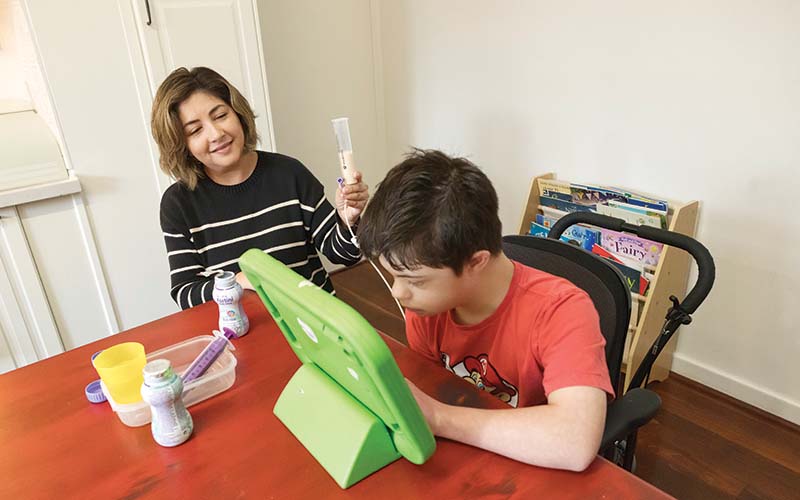
For thousands of children around Australia with intellectual and other disabilities, the process of eating can be traumatic, posing challenges that veer from uncomfortable to life threatening.
The Rett Syndrome Behaviour Questionnaire (RSBQ) describes behavioural and emotional features. This study investigated total RSBQ score trajectories and their clustering, and for trajectory groups, relationships with genotype and mobility, weight-for-age z scores, and seizure frequency.
In children with Rett syndrome, this study aimed to (1) describe gross motor skill trajectories; and (2) analyse the influences of genetic variant and comorbidities. This was a prospective longitudinal study conducted at the Danish National Center for Rett Syndrome 2008 to 2022. The Rett Syndrome Gross Motor Scale (RSGMS) was administered, and clinical data collected at each visit.
Autism spectrum disorder (ASD), a neurodevelopmental condition characterised by social and communication differences, is complex and aetiologically heterogeneous. Untargeted metabolomics is emerging as a tool in screening for biochemical abnormalities. This research was conducted using the Australian Autism Biobank resource and involved analysis of plasma metabolites to characterise metabolite differences between autistic children and controls.
To explore how those with a physical illness in childhood are managing in relationships across childhood to young adulthood.
Cancer is a leading cause of death globally. Accurate cancer burden information is crucial for policy planning, but many countries do not have up-to-date cancer surveillance data. To inform global cancer-control efforts, we used the Global Burden of Diseases, Injuries, and Risk Factors Study (GBD) 2023 framework to generate and analyse estimates of cancer burden for 47 cancer types or groupings by age, sex, and 204 countries and territories from 1990 to 2023, cancer burden attributable to selected risk factors from 1990 to 2023, and forecasted cancer burden up to 2050.
Aim: To describe the real-world effects of trofinetide in individuals with Rett syndrome (RTT) using the 18-month follow-up analysis of the LOTUS study.