
Search

Rothwell Family Fellow; Head, Airway Epithelial Research
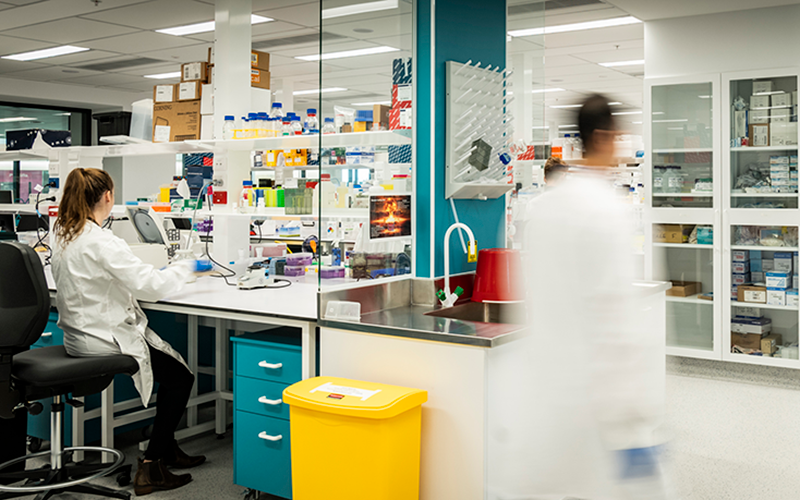
The Kids Research Institute Australia researchers will share in $2.3 million awarded by the Western Australian Department of Health Innovation Seed Fund.

A The Kids Research Institute Australia study published in The Lancet Child & Adolescent Health has found that survivors of very preterm birth face declining lung function
The global prevalence of colistin-resistant Klebsiella pneumoniae (ColRkp) facilitated by chromosomal and plasmid-mediated Ara4N or PEtN-remodeled LPS alterations has steadily increased with increased colistin usage for treating carbapenem-resistant K. pneumoniae (CRkp).
A population of neutrophils recruited into cystic fibrosis (CF) airways is associated with proteolytic lung damage, exhibiting high expression of primary granule exocytosis marker CD63 and reduced phagocytic receptor CD16. Causative factors for this population are unknown, limiting intervention. Here we present a laboratory model to characterize responses of differentiated airway epithelium and neutrophils following respiratory infection.
ATP Binding Cassette Subfamily A Member 3 (ABCA-3) is a lipid transporter protein highly expressed in type-II alveolar (AT-II) cells. Mutations in ABCA3 can result in severe respiratory disease in infants and children. To study ABCA-3 deficiency in vitro, primary AT-II cells would be the cell culture of choice although sample accessibility is limited. Our aim was to investigate the suitability of primary nasal epithelial cells, as a surrogate culture model for AT-II cells, to study ABCA-3 deficiency.
The airway epithelium of children with wheeze is characterized by defective repair that contributes to disease pathobiology. Dysregulation of developmental processes controlled by Notch has been identified in chronic asthma. However, its role in airway epithelial cells of young children with wheeze, particularly during repair, is yet to be determined.
The epithelium is integral to the protection of many different biological systems and for the maintenance of biochemical homeostasis. Emerging evidence suggests that particular children have epithelial vulnerabilities leading to dysregulated barrier function and integrity, that resultantly contributes to disease pathogenesis.
Prader-Willi syndrome (PWS) is a rare genetic disorder characterised by neurodevelopmental delays, hyperphagia, difficulties with social communication and challenging behaviours. Individuals require intensive supervision from caregivers which may negatively affect caregiver quality of life. This study used data collected in the Australasian PWS Registry to evaluate associations between child behaviours and caregiver mental well-being.
In this study we assessed the effects of antigen exposure in mice pre‐sensitized with allergen following viral infection on changes in lung function, cellular responses and tight junction expression.