
Search
Secondary prevention of acute rheumatic fever (ARF) and rheumatic heart disease (RHD) involves continuous antimicrobial prophylaxis among affected individuals and is recognised as a cornerstone of public health programmes that address these conditions. However, several important scientific issues around the secondary prevention paradigm remain unresolved.
Streptococcus pyogenes, or group A Streptococcus (GAS), infections contribute to a high burden of disease in Aboriginal Australians, causing skin infections and immune sequelae such as rheumatic heart disease. Controlling skin infections in these populations has proven difficult, with transmission dynamics being poorly understood. We aimed to identify the relative contributions of impetigo and asymptomatic throat carriage to GAS transmission.
Jonathan Carapetis AM AM MBBS FRACP FAFPHM PhD FAHMS Co-Head, Strep A Translation; Co-Founder of REACH 08 6319 1000 contact@thekids.org.au Head,
This research sought to provide an outline of identified household-level environmental health initiatives to reduce or interrupt Strep A transmission along each of these pathways.
Secondary prophylaxis to prevent rheumatic heart disease (RHD) progression, in the form of four-weekly intramuscular benzathine benzylpenicillin G (BPG) injections, has remained unchanged since 1955. Qualitative investigations into patient preference have highlighted the need for long-acting penicillins to be delivered less frequently, ideally with reduced pain.

Honorary

Senior Research Fellow

Efforts to eliminate rheumatic heart disease (RHD) have been significantly strengthened, with a $1 million grant awarded through the Future Health Research and Innovation Fund (FHRI) Spotlight Program.
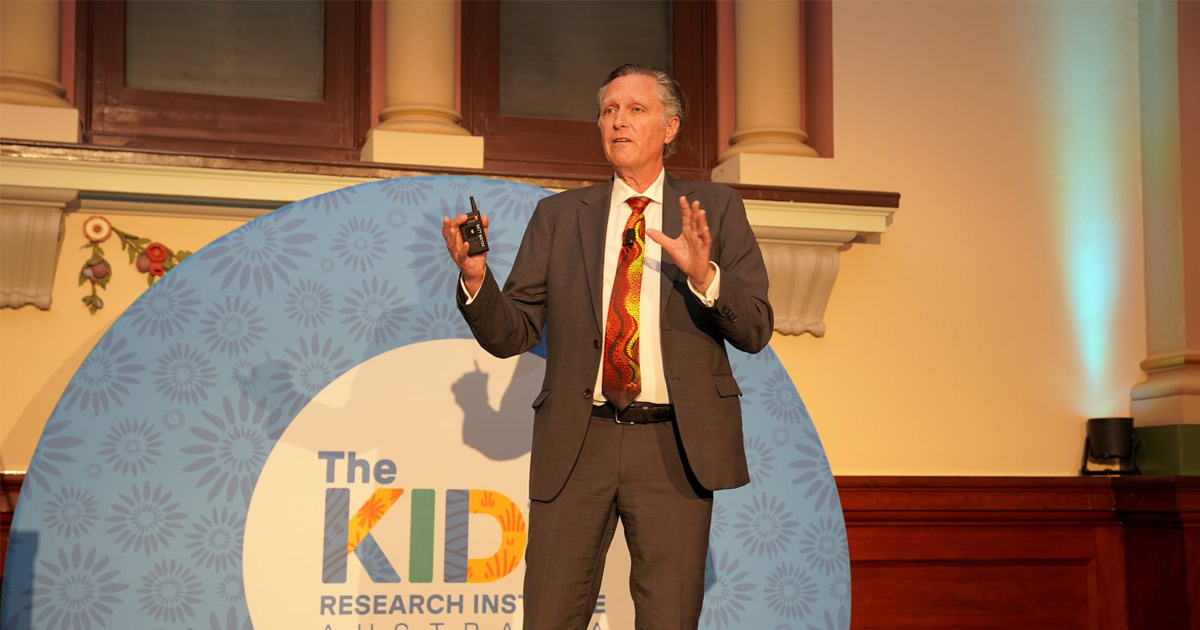
Last night, almost 60 supporters gathered at Adelaide Town Hall for the inaugural The Kids Research Institute Australia Adelaide Lecture, Not Just a Sore Throat: The Race to Stop One of the Deadliest Bugs on the Planet.

Six researchers from The Kids Research Institute Australia have been awarded $8.9 million in prestigious Investigator Grants from the National Health and Medical Research Council.