Search
Skin infections affect physical health and, through stigma, social-emotional health. When untreated, they can cause life-threatening conditions. We aimed to assess the effect of a holistic, co-designed, region-wide skin control programme on the prevalence of impetigo.
Healthy skin is important for maintaining overall physical and cultural health and wellbeing. However, remote-living Australian Aboriginal children contend with disproportionally high rates of Streptococcus pyogenes (Strep A) infected impetigo.
While there are many skin infections, reducing the burden of scabies and impetigo for remote living Aboriginal people, particularly children remains challenging. Aboriginal children living in remote communities have experienced the highest reported rate of impetigo in the world and are 15 times more likely to be admitted to hospital with a skin infection compared to non-Aboriginal children.
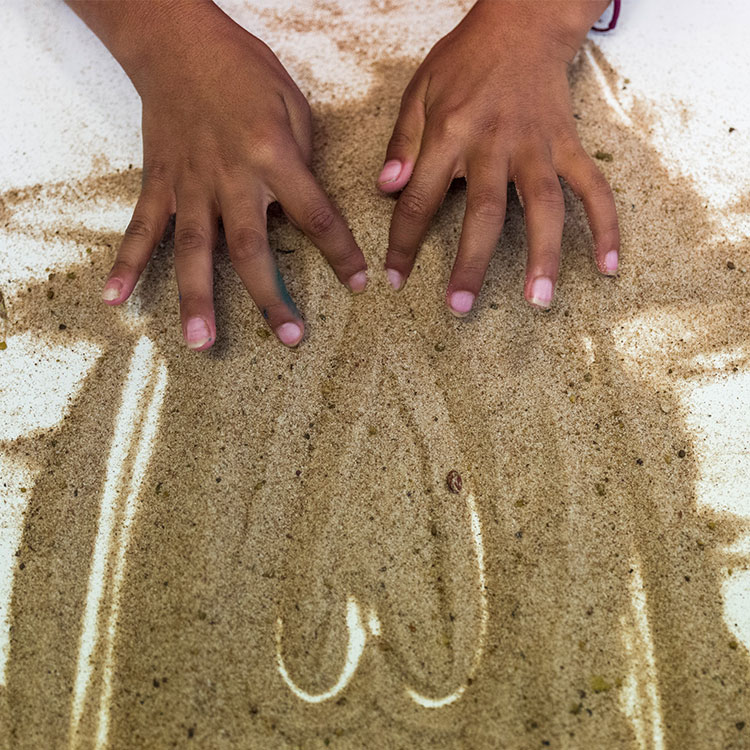
In partnership with local Aboriginal Community Controlled Health Organisations, the Elder-led co-designed Koolungar Moorditj Healthy Skin project is guided by principles of reciprocity, capacity building, respect, and community involvement. Through this work, the team of Elders, community members, clinicians and research staff have gained insight into the skin health needs of urban-living Aboriginal koolungar (children); and having identified a lack of targeted and culturally appropriate health literacy and health promotion resources on moorditj (strong) skin, prioritised development of community-created healthy skin resources.
Impetigo or skin sores are estimated to affect >162 million people worldwide. Detailed descriptions of the anatomical location of skin sores are lacking.
A high burden of bacterial skin infections is well documented in remote-living Indigenous children and young people in high-income countries.
Achieving healthy skin requires the prevention of infectious diseases that affect the skin. Prevention activities range from environmental health improvements to address inequities in living situations, through to community-wide treatment programs to reduce transmission and improve skin health.
Group A Streptococcus (Strep A) is responsible for a significant global health and economic burden. The recent prioritization of Strep A vaccine development by the World Health Organization has prompted global research activities and collaborations. To progress this prioritization, establishment of robust surveillance for Strep A to generate updated regional disease burden estimates and to establish platforms for future impact evaluation is essential.
Recruitment in research can be challenging in Australian Aboriginal contexts. We aimed to evaluate the SToP (See, Treat, Prevent skin infections) trial recruitment approach for Aboriginal families to identify barriers and facilitators and understand the utility of the visual resource used.
Staphylococcus aureus bloodstream (SAB) infection is a common and severe infectious disease, with a 90-day mortality of 15%-30%. Despite this, <3000 people have been randomized into clinical trials of treatments for SAB infection.