
Search

The fifth Big Elders meeting/gathering was held on the Wednesday, 28th of February 2024 at Burswood on Swan.
This research project was part of the broader Ngulluk Koolunga Ngulluk Koort (Our Children, Our Heart) five-year (2016 to 2020) project.
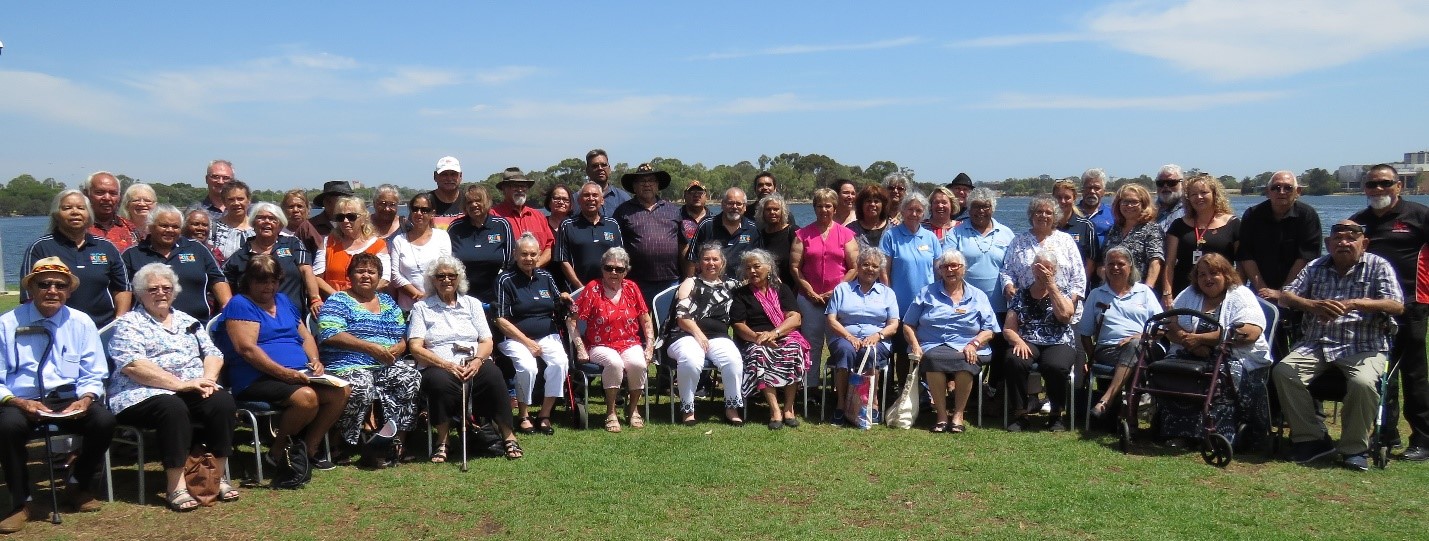
The third Big Elders meeting/gathering was held on the 26th of February 2019 at Burswood on Swan.
Fetal alcohol spectrum disorder (FASD) is a lifelong disability of varying severity that occurs among individuals prenatally exposed to alcohol. Among Aboriginal and Torres Strait Islander (Indigenous) Australians, the effects of colonisation and ongoing racism could increase the risk of alcohol consumption during pregnancy.
The research protocol described aims to examine and establish the health outcomes of children and young people living in Out-of-Home Care (OOHC) in Perth, Western Australia from the perspective of the care recipients and service providers. A Study Advisory Panel will be established comprised of Aboriginal Elders (because of the over-representation of Aboriginal children in OOHC), health professionals and other relevant stakeholders to help co-design all phases of the study.
In Australia, Aboriginal children experience disproportionate rates of type 2 diabetes (T2D) compared with non-Aboriginal children. The aim of this qualitative study was to explore the experiences of Aboriginal adolescents with T2D and their family members to better understand the influences of T2D on self-management, with findings used to inform an enhanced service model of care.
Epidemiologic data on invasive group C/G Streptococcus (iGCGS) infections are sparse internationally. Linked population-level hospital, pathology, and death data were used to describe the disease burden in Western Australia, Australia, during 2000-2018 compared with that of invasive group A Streptococcus (GAS, Streptococcus pyogenes) infections.
Having a preterm (<37 weeks' gestation) birth may increase a woman's risk of early mortality. Aboriginal and Torres Strait Islander women have higher preterm birth and mortality rates compared with other Australian women.
Alcohol related harms disproportionately affect Aboriginal people in Australia. Motives to drink have been identified as the most proximal factor to alcohol consumption.The aim of this study is to assess the validity of a culturally modified Drinking Motives Questionnaire-Revised (DMQ-R) (Cooper, 1994) with Aboriginal participants. The study was cross sectional, utilising data collected via face-to-face surveys with a sample of adult Aboriginal participants.
The HEAL Network aims to strengthen the Australian health system and community resilience to climate change, extreme events, and environmental degradation.