
Search
Delays within the motor domain are often overlooked as an early surveillance marker for autism. The present study evaluated motor difficulties and its potential as an early predictive marker for later autism likelihood in a cohort of infants showing early behavioral signs of autism aged 9-14 months. The motor domain was evaluated using the motor subscales of the Mullen Scales of Early Learning at baseline, and at a 6-month follow-up.
The measurement of quality of life (QOL) in children with intellectual disability often relies upon proxy report via caregivers. The current study investigated whether caregiver psychological distress mediates or moderates the effects of impairment on their ratings of QOL in children with intellectual disability.
Several researchers have hypothesised that individuals with Autism Spectrum Disorder (ASD) show encoding delays in their obligatory event-related potentials (ERPs)/ event-related fields (ERFs) for low-level auditory information compared to neurotypical (NT) samples. However, empirical research has yielded varied findings, such as low-level auditory processing in ASD samples being unimpaired, superior, or impaired compared to NT samples. Diverse outcomes have also been reported for studies investigating ASD-NT differences in functional lateralisation of delays.
The aim of this study was to understand the challenges experienced by families obtaining a diagnosis and therapy for developmental coordination disorder (DCD). Parents of 435 children aged 4-18 years with persistent motor difficulties consistent with a diagnosis of DCD completed an online survey. Diagnostic timeline and diagnostic label/s received were examined, along with therapies accessed.
Birth order effects have been linked to variability in intelligence, educational attainment and sexual orientation. First- and later-born children have been linked to an increased likelihood of an Autism Spectrum Disorder (ASD) diagnosis, with a smaller body of evidence implicating decreases in cognitive functioning with increased birth order. The present study investigated the potential association between birth order and ASD diagnostic phenotypes in a large and representative population sample.
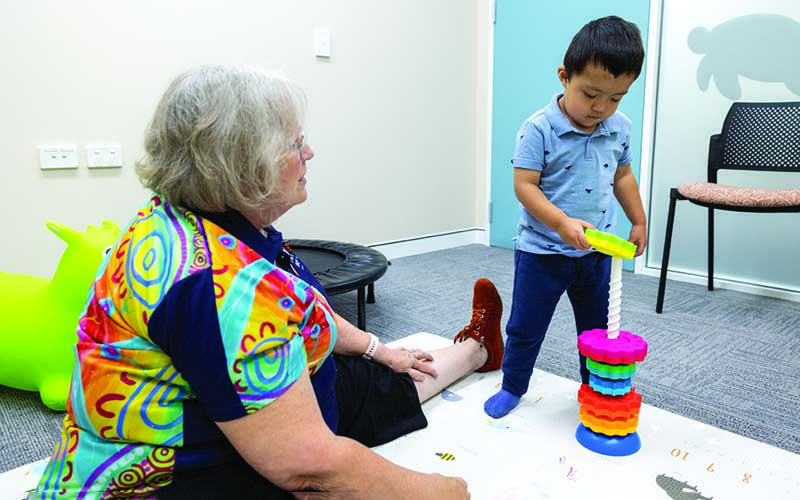
Discover how this family is benefitting from CliniKids' evidence-based therapies.
Autism spectrum disorder (ASD), a neurodevelopmental condition characterised by social and communication differences, is complex and aetiologically heterogeneous. Untargeted metabolomics is emerging as a tool in screening for biochemical abnormalities. This research was conducted using the Australian Autism Biobank resource and involved analysis of plasma metabolites to characterise metabolite differences between autistic children and controls.
We do not know much about what support services people think are okay for young autistic children. This study was a survey of 253 people. We asked autistic adults, parents, and professionals from Australia and New Zealand whether they thought it was okay to provide support services to autistic children.
Maternal immune activation and prenatal maternal stress are well-studied risk factors for psychiatric conditions such as autism and schizophrenia. Animal studies have proposed the gut microbiome as a mechanism underlying this association and have found that risk factor-related gut microbiome alterations persist in the adult offspring.
There is a common mischaracterisation that autistic individuals have reduced or absent empathy. Measurement issues may have influenced existing findings on the relationships between autism and empathy, and the structure of the empathy construct in autism remains unclear.