
Search
Transgender and gender diverse (“trans”) people are more likely to experience adverse mental health outcomes due to the social adversities that are commonly experienced. One ameliorating factor for poor mental health outcomes can be connection to community, often facilitated in online spaces such as TikTok.
Trans and gender diverse (trans) young people experience higher rates of physical and mental ill-health due to chronic exposure to gender minority stress. Consequently, trans young people report higher health and mental healthcare service utilisation. Disconcertingly, negative experiences of healthcare services are prevalent among trans young people, especially those with additional marginalised identities and backgrounds who experience multiple forms of marginalisation.
Transgender is a term that includes people whose gender identity, gender expression, or behavior does not conform to conventional gender notions of male or female.

A digital game adapted by researchers is set to deliver engaging, accessible help to prevent depression for trans and gender diverse young people.
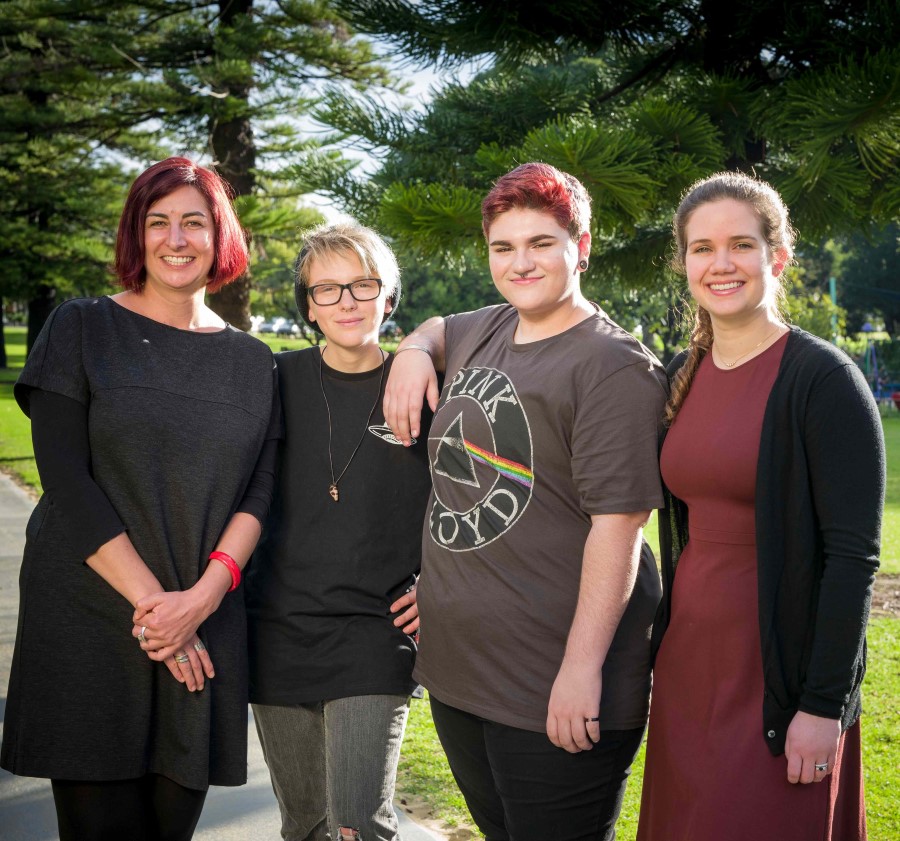
A ground-breaking survey by The Kids researchers has become the new reference point to guide policy change and educate health providers to better support trans and gender-diverse youth in Australia.

When Trans Pathways ambassador Drew, 17, came out as trans three years ago, the biggest hurdle for him was the availability of services and the time it took to access support.

Raising a child in one gender and then having them identify as another at any stage in their life can be difficult for a parent to understand and is not always an easy shift for a parent to make.
The Kids Research Institute Australia is proud to have been selected in a pilot program to improve the promotion and retention of women and gender minorities in science.
Lesbian, gay, bisexual and transgender parents are often reluctant to disclose their sexual orientation to health professionals for fear of discrimination...
The aim of this study was to explore the experiences of lesbian, gay and transgender families accessing health care for their children.