Skip to content
The Kids Research Institute Australia logo
Donate

Search

Research

Maternal immune-related conditions during pregnancy may be a risk factor for neuropsychiatric problems in offspring throughout childhood and adolescence

Emerging research suggests that maternal immune activation (MIA) may be associated with an increased risk of adverse neurodevelopmental and mental health outcomes in offspring. Using data from the Raine Study, we investigated whether MIA during pregnancy was associated with increased behavioral and emotional problems in offspring longitudinally across development.

Research

Brief Report: Facial Asymmetry and Autistic-Like Traits in the General Population

Atypical facial morphology, particularly increased facial asymmetry, has been identified in some individuals with Autism Spectrum Conditions (ASC). Many cognitive, behavioural and biological features associated with ASC also occur on a continuum in the general population.

Research

Factors associated with dental hospitalisations in children with intellectual disability or autism spectrum disorder: a Western Australian population-based retrospective cohort study

This study investigated dental hospitalisations in Western Australian (WA) children with intellectual disability (ID) and/or autism spectrum disorder (ASD) aged up to 18 years.

Research

The effect of functioning on Quality of Life Inventory-Disability measured quality of life is not mediated or moderated by parental psychological distress

The measurement of quality of life (QOL) in children with intellectual disability often relies upon proxy report via caregivers. The current study investigated whether caregiver psychological distress mediates or moderates the effects of impairment on their ratings of QOL in children with intellectual disability.

Research

Randomised Controlled Trial of a Therapeutic Playgroup for Children with Developmental Delays

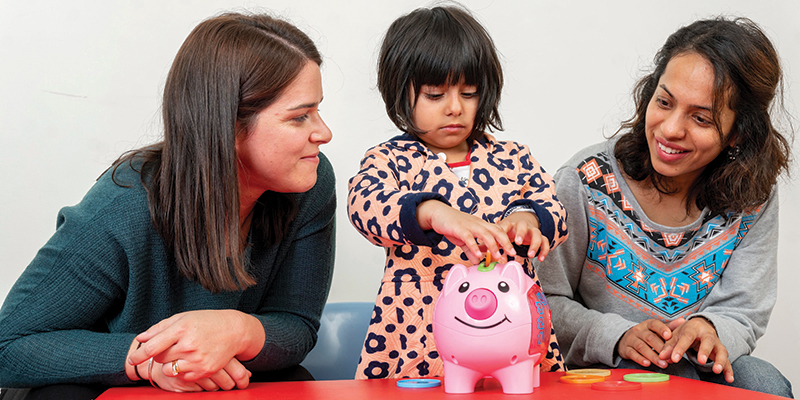
A single-blind randomised control trial investigated the effectiveness of the Learn, Engage and Play (LEaP) playgroup. Seventy-one children with developmental delay were randomly allocated to an 8-week LEaP playgroup or control group and followed up at 12 and 28 weeks.

Research

Delayed cortical processing of auditory stimuli in children with autism spectrum disorder: A meta-analysis of electrophysiological studies

Several researchers have hypothesised that individuals with Autism Spectrum Disorder (ASD) show encoding delays in their obligatory event-related potentials (ERPs)/ event-related fields (ERFs) for low-level auditory information compared to neurotypical (NT) samples. However, empirical research has yielded varied findings, such as low-level auditory processing in ASD samples being unimpaired, superior, or impaired compared to NT samples. Diverse outcomes have also been reported for studies investigating ASD-NT differences in functional lateralisation of delays.

Research

Suicide by young Australians, 2006-2015: a cross-sectional analysis of national coronial data

Citation: Hill NTM, McGorry PD, Robinson J. Suicide by young Australians, 2006–2015: a cross-sectional analysis of national coronial data. Med J Aust

Research

Experiences of Parents of Specialist Peer Mentored Autistic University Students

Parents continue to support to autistic university students, and consequently, experience considerable stress. The aim was to explore the experiences of parents of specialist peer mentored university students and to examine these using the ICF as a theoretical framework.

Research

Performance of the Autism Observation Scale for Infants with community-ascertained infants showing early signs of autism

We investigated whether a commonly used research assessment - the Autism Observation Scale for Infants (AOSI) - accurately measures autism behaviours among infants showing early signs of autism identified within the community. The AOSI is often included in studies tracking the development of infants at increased likelihood of autism, such as the infant siblings of diagnosed children. However, the suitability of this measure has not previously been tested with community-referred infants.

Research

Temperament in individuals with Autism Spectrum Disorder: A systematic review

The study of temperament in Autism Spectrum Disorder (ASD) has the potential to provide insight regarding variability in the onset, nature, and course of both core and co-morbid symptoms. The aim of this systematic review was to integrate existing findings concerning temperament in the context of ASD. Searches of Medline, PsychInfo and Scopus databases identified 64 relevant studies. As a group, children and adolescents with ASD appear to be temperamentally different from both typically developing and other clinical non-ASD groups, characterized by higher negative affectivity, lower surgency, and lower effortful control at a higher-order level.