
Search
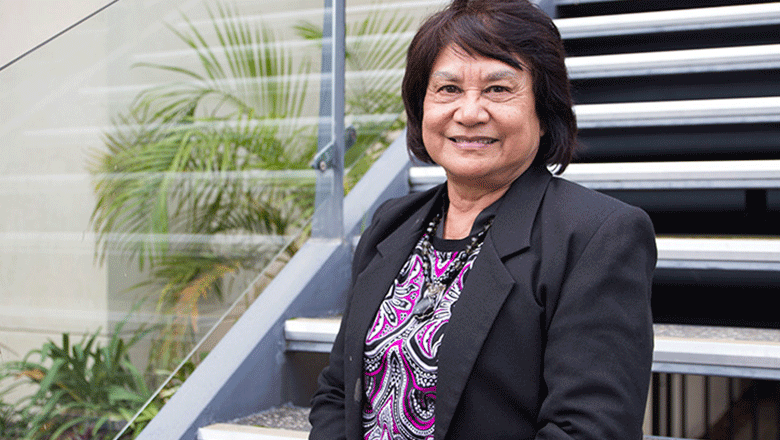
To celebrate NAIDOC week we sat down with Isabelle Adams, the coordinator of The Kids Research Institute Australia's Kulunga Aboriginal Research Development Unit (KARDU).
The Kids Research Institute Australia Founding Director Professor Fiona Stanley will help launch a series of children's books on Monday, written by local Aboriginal people
Despite bearing a higher burden of osteoarthritis, little research has examined disparities in the access, utilisation and surgical outcomes associated with total joint replacement (TJR) among Aboriginal and Torres Strait Islander people.
Globally, there is a recognised need that all populations should be able to access the benefits of genomics and precision medicine. However, achieving this remains constrained by a paucity of data that quantifies access to clinical genomics, particularly amongst Indigenous populations.
Mainstream youth mental health services struggle to comprehend the connection between colonisation and service provision for Aboriginal young people. This is the consensus agreed by Aboriginal Elders from Perth, Western Australia and young Aboriginal leaders within their communities.
Globally, Indigenous people have a greater incidence and earlier onset of diabetes than the general population and have higher documented rates of emotional distress and mental illness. This systematic review will provide a synthesis and critical appraisal of the evidence focused on the social and emotional well-being of Indigenous peoples living with diabetes, including prevalence, impact, moderators, and the efficacy of interventions.
The Ngulluk Koolunga Ngulluk Koort (Our Children Our Heart) project conducted extensive Elder and community consultation to develop principles and practice recommendations for child protection governance in Western Australia. We explore these principles and practice recommendations and highlight the need for culturally safe community consultation and governance with a focus on repairing damage incurred by the Aboriginal and Torres Strait Islander community from past child protection policies.
Chris Deborah Tamara Brennan-Jones Lehmann Veselinovic PhD AO, MBBS, MSc BSc(Hons) MClinAud PhD Head, Ear and Hearing Health Honorary Emeritus Fellow
First Nations children hospitalised with acute lower respiratory infections (ALRIs) are at increased risk of future bronchiectasis (up to 15-19%) within 24-months post-hospitalisation. An identified predictive factor is persistent wet cough a month after hospitalisation and this is likely related to protracted bacterial bronchitis which can progress to bronchiectasis, if untreated.
To establish the priorities of primary care providers to improve assessment and treatment of skin sores and sore throats among Aboriginal and Torres Strait Islander people at risk of acute rheumatic fever (ARF) and rheumatic heart disease (RHD).