
Search
Citation: O'Moore M, Jones B, Hickie M, …….. Marsh JA, Wood N. National pharmacovigilance of seasonal influenza vaccines in Australia. Med J Aust.
Dynamic cellular and molecular adaptations in early life significantly impact health and disease. Upon birth, newborns are immediately challenged by their environment, placing urgent demands on the infant immune system.
Western Australia (WA) has experienced a resurgence of congenital syphilis. Appropriate microbiology testing of the neonate is recommended to confirm infection, including syphilis immunoglobulin M (IgM), rapid plasma reagin (RPR) paired with a maternal sample, and polymerase chain reaction (PCR) on placenta and nasal swabs.
There is a recognized unmet need for clinical trials to provide evidence-informed care for infants, children and adolescents. This Special Communication outlines the capacity of 3 distinct trial design strategies, sequential, parallel, and a unified adult-pediatric bayesian adaptive design, to incorporate children into clinical trials and transform this current state of evidence inequity. A unified adult-pediatric whole-of-life clinical trial is demonstrated through the Staphylococcus aureus Network Adaptive Platform (SNAP) trial.
This research sought to provide an outline of identified household-level environmental health initiatives to reduce or interrupt Strep A transmission along each of these pathways.
The aim of this review was to investigate the impact of short message service (SMS)-based interventions on childhood and adolescent vaccine coverage and timeliness.
Pneumococcal conjugate vaccines (PCV) reduced the risk of respiratory syncytial virus (RSV) in a randomized clinical trial. We aimed to assess the real-world effectiveness of PCV on RSV-hospitalizations among Western Australian infants.
Children with chronic medical conditions are at increased risk of severe influenza. Uptake of influenza vaccination in children and adolescents with these identified special risk medical conditions is suboptimal.
The coronavirus disease 2019 (COVID-19) pandemic continues to impact mental health and wellbeing globally. There is a lack of scientific documentation highlighting the mental health impact of COVID-19 in Bhutan. We present the mental health burdens and control measures taken, and suggest ways to further strengthen mental health services in Bhutan.
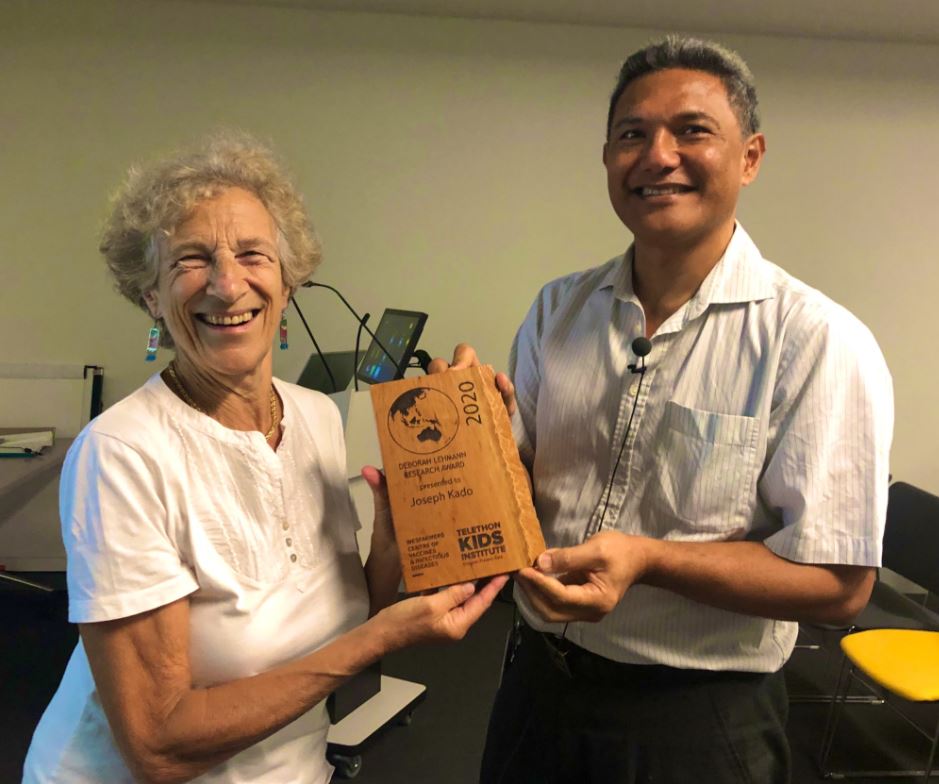
The Wesfarmers Centre has established the Deborah Lehmann Research Award to acknowledge the significant contribution that Clinical Associate Professor Deborah Lehmann AO has made to paediatric infectious disease research.