
Search
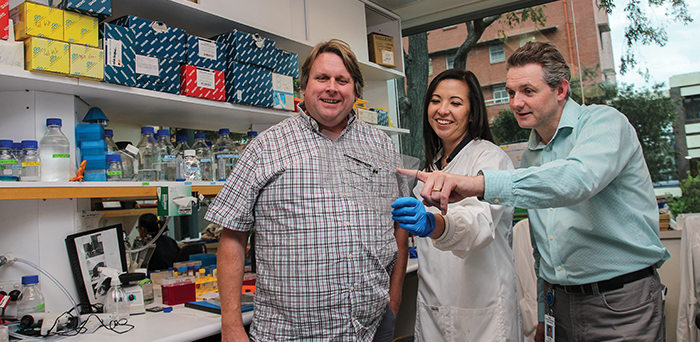
In the field of cancer research, lobbying efforts by the The Kids Cancer Centre have contributed to major initiatives including Australia’s first personalised medicine program for children with high-risk cancer, and a mission to boost survival rates in brain cancer patients.
Rett syndrome (RTT) is a complex neurodevelopmental X-linked disorder associated with severe functional impairments and multiple comorbidities. There is wide variation in the clinical presentation, and because of its unique characteristics, several evaluation tools of clinical severity, behavior, and functional motor abilities have been proposed specifically for it.
CDKL5 deficiency disorder (CDD) was first identified as a cause of human disease in 2004. Although initially considered a variant of Rett syndrome, CDD is now recognised as an independent disorder and classified as a developmental epileptic encephalopathy.
The Rett Syndrome Gross Motor Scale (RSGMS) is an observational measurement, assessing gross motor skills in individuals with Rett syndrome. A Dutch version is lacking. The current study aims to translate and cross-culturally adapt the original RSMGS to Dutch and assess its inter-rater and intra-rater reliability.
We investigated the longitudinal stability of hand function in Rett syndrome and to analyze further the relationships between stability of hand function and genotype, age, and walking ability. Study design: Longitudinal video data of functional abilities of individuals with genetically confirmed Rett syndrome were collected by families of individuals registered with the Australian Rett Syndrome Database.
To explore patterns of parafunction, and bruxism, and its relationships with genotype and snoring in individuals with Rett syndrome.
There is a dearth of literature available on the comparative oral health status of those with Rett syndrome (RTT) despite diurnal bruxism being a supportive diagnostic criterion for the disorder. This study was designed to investigate the dental experiences of individuals with RTT in terms of perceived at-home and professional dental care.
Rett syndrome (RTT) is a rare neurodevelopmental disorder mainly affecting females and is caused by a mutation in the MECP2 gene. Recent research identified the domains of quality of life (QOL) important for children with RTT but there has been no investigation of domains important for adults. This qualitative study explored QOL in adults with RTT and compared domains with those previously identified for children.