Skip to content

Search

BEAT-CF (Bayesian Evidence Adaptive Treatment for people with Cystic Fibrosis): description of a prospective cohort for nested studies in cystic fibrosis

Despite recent improvements in treatment modalities for cystic fibrosis (CF), there is currently limited evidence and a lack of consensus regarding optimal treatment strategies for the different aspects of CF, including pulmonary exacerbations (PEx). We aimed to establish a prospective cohort of people with CF (pwCF) to evaluate alternative approaches to managing CF in the era of modulator therapies.

Cardiac monitoring safety assessment framework for early phase group a streptococcal vaccine trials

This paper presents a comprehensive cardiac safety framework for early clinical development of Streptococcus pyogenes (Group A Streptococcus) vaccines, endorsed by the Strep A Vaccine Global Consortium and the Australian Strep A Vaccine Initiative. Given historical concerns about vaccine-associated acute rheumatic fever, we have established standardized echocardiography protocols integrated with clinical assessment for monitoring cardiac safety in early-phase vaccine trials.

Immunogenicity and Safety of a 2 + 1 DTPa Priming Schedule in Australian Infants and the Impact of Maternally Derived Antibodies on Pertussis Antibody Responses up to 4 Years of Age

We assessed the impact of maternally derived pertussis antibodies on infant responses to a 2 + 1 vaccine schedule (6 weeks, 12 weeks, and 12 months). Infants with baseline antibodies showed lower IgG responses following the primary vaccination series, but this did not impair booster responses at 4 years of age.

Respiratory Syncytial Virus Strain Evolution and Mutations in Western Australia in the Context of Nirsevimab Prophylaxis

Nirsevimab is a long-acting monoclonal antibody used to prevent respiratory syncytial virus (RSV) infection in infants and high-risk children. During the 2024 RSV season in Western Australia, 21 922 doses were administered to infants entering their first season and 1221 doses to at-risk children. In this context, the selection and spread of escape variants are a potential concern. This study aimed to investigate nirsevimab binding site mutations using clinical and wastewater data.

Bringing optimised COVID-19 vaccine schedules to immunocompromised populations: statistical elements and design

Bringing optimised coronavirus disease 2019 (COVID-19) vaccine schedules to immunocompromised populations (BOOST-IC) is a multi-site, adaptive platform trial designed to assess the effect of different booster vaccination schedules in the Australian immunocompromised population on the immunogenicity, safety and cross-protection against COVID-19 caused by severe acute respiratory syndrome coronavirus 2 (SARS-CoV-2) and its variants. 

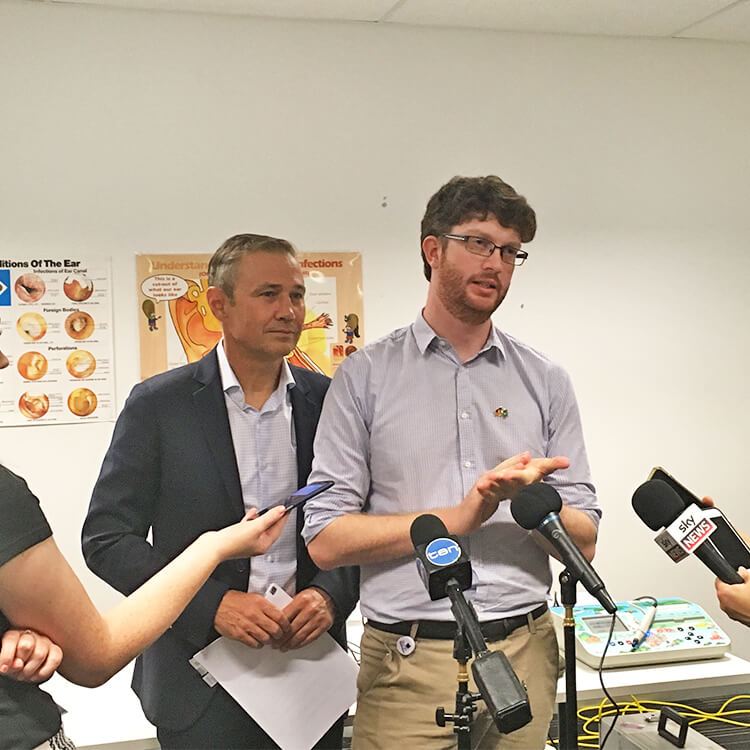
Minimising antibiotic use through prevention of childhood ear infections

Otitis media (OM), or middle ear infection, is one of the most common childhood illnesses globally. In Australia, OM remains a leading cause of antibiotic prescriptions in children, despite growing awareness of antimicrobial resistance (AMR) and the need for stewardship. Preventing OM not only reduces the burden of disease but also plays a critical role in curbing unnecessary antibiotic use and slowing the rise of AMR.

Invasive mould infection in children – advances made or obstacles remaining?

Invasive mould infection (IMI) is a major cause of morbidity and mortality in immunocompromised children. Outcomes for paediatric patients with IMI remain poor, due in part to the limitations of available diagnostic tools and therapeutic agents.

Ontogeny of plasma cytokine and chemokine concentrations across the first four months of human life in a Papua new Guinean cohort

Dynamic molecular changes in early life follow a robust ontogeny as the infant immune system adapts to the demands of its new environment. Studies of plasma immunomodulatory cytokines and chemokines have previously demonstrated ontogenetic patterns of immune development across the first week of life. However, how plasma cytokine and chemokines concentrations evolve over the first 4 months of life remains unknown. 

Collecting behavioural data across countries during pandemics: Development of the COVID-19 Risk Assessment Tool

Tools that can be used to collect behavioural data during pandemics are needed to inform policy and practice. The objective of this project was to develop the Your COVID-19 Risk tool in response to the global spread of COVID-19, aiming to promote health behaviour change. We developed an online resource based on key behavioural evidence-based risk factors related to contracting and spreading COVID-19. This tool allows for assessing risk and provides instant support to protect individuals from infection.

Development and Validation of a Stability-Indicating RP-HPLC Method for Edaravone Quantification

Edaravone is used to treat motor neurone disease (MND) by slowing disease progression and prolonging survival time. Currently, it is available as an IV infusion (Radicava®, Jersey City, NJ, USA) and an oral liquid suspension (Radicava ORS®, Jersey City, NJ, USA). Development of novel edaravone formulations is still an active field of research that requires a validated stability-indicating assay capable of providing specific, precise, and accurate quantification of edaravone content.