
Search
It is unclear whether sex differences in behavior arising from birth weight (BW) are genuine because of the cross-sectional nature and potential confounding in previous studies. We aimed to test whether sex differences associated with BW phenotype were reproducible using a Mendelian randomization approach, i.e., association between polygenic score (PGS) for BW and behavior outcomes across childhood and adolescence.
Pregnant women are advised to take folic acid (FA) supplements before conception and during the first trimester of pregnancy. Many women continue FA supplementation throughout pregnancy, and concerns have been raised about associations between excessive FA intake and adverse maternal and child health outcomes.
Asthma during pregnancy is associated with a range of adverse perinatal outcomes. It is also linked to increased rates of neurodevelopmental conditions in the offspring. We aimed to assess whether fractional exhaled nitric oxide (FENO)-based asthma management during pregnancy improves child developmental and behavioural outcomes compared to usual care. The Breathing for Life Trial was a randomised controlled trial that compared FENO-based asthma management during pregnancy to usual care.
Diabetes in pregnancy is associated with increased risk of long-term metabolic disease in the offspring, potentially mediated by in utero epigenetic variation. Previously, we identified multiple differentially methylated single CpG sites in offspring of women with gestational diabetes mellitus, but whether stretches of differentially methylated regions can also be identified in adolescent GDM offspring is unknown.
Perinatal inflammation increases the risk for bronchopulmonary dysplasia in preterm neonates, but the underlying pathophysiological mechanisms remain largely unknown. Given their anti-inflammatory and regenerative capacity, multipotent adult progenitor cells (MAPC) are a promising cell-based therapy to prevent and/or treat the negative pulmonary consequences of perinatal inflammation in the preterm neonate.
Psychological distress in the early postpartum period can have long-lasting deleterious effects on a mother's well-being and negatively affect her infant's development. Intervention approaches based in contemplative practices such as mindfulness and loving-kindness and compassion are intended to alleviate distress and cultivate well-being and can be delivered effectively as digital mental health interventions.
Contemporary models of NICU care emphasize the critical role of parents in supporting their infant's development. Fathers play an important, but underutilized, role throughout their infant's NICU journey. This narrative review describes the main direct and indirect mechanisms through which fathers support the development of their NICU infant, and the barriers and facilitators to this support as described in current research.
Western Australia (WA) has experienced a resurgence of congenital syphilis. Appropriate microbiology testing of the neonate is recommended to confirm infection, including syphilis immunoglobulin M (IgM), rapid plasma reagin (RPR) paired with a maternal sample, and polymerase chain reaction (PCR) on placenta and nasal swabs.

A group of 19 Aboriginal women from South Australia, along with researchers from The Kids Research Institute Australia, have developed a culturally responsive, evidence-based model of care to support Aboriginal women with cardiometabolic complications in pregnancy in SA.
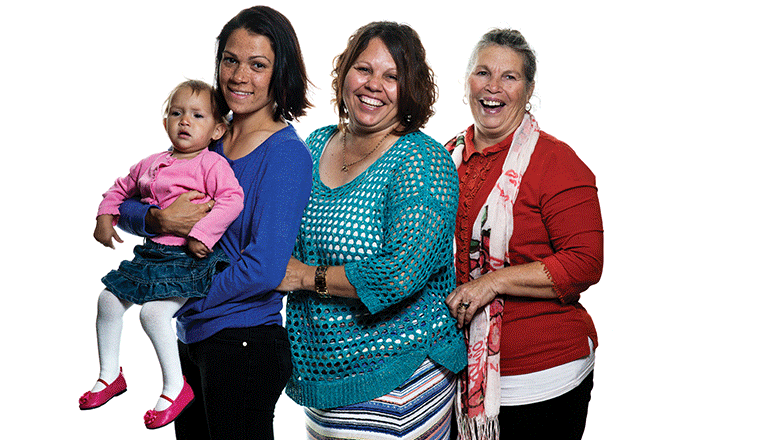
A study by researchers at The Kids Research Institute Australia has found Aboriginal mothers are at a significantly greater risk of preventable death than other Australia