
Search
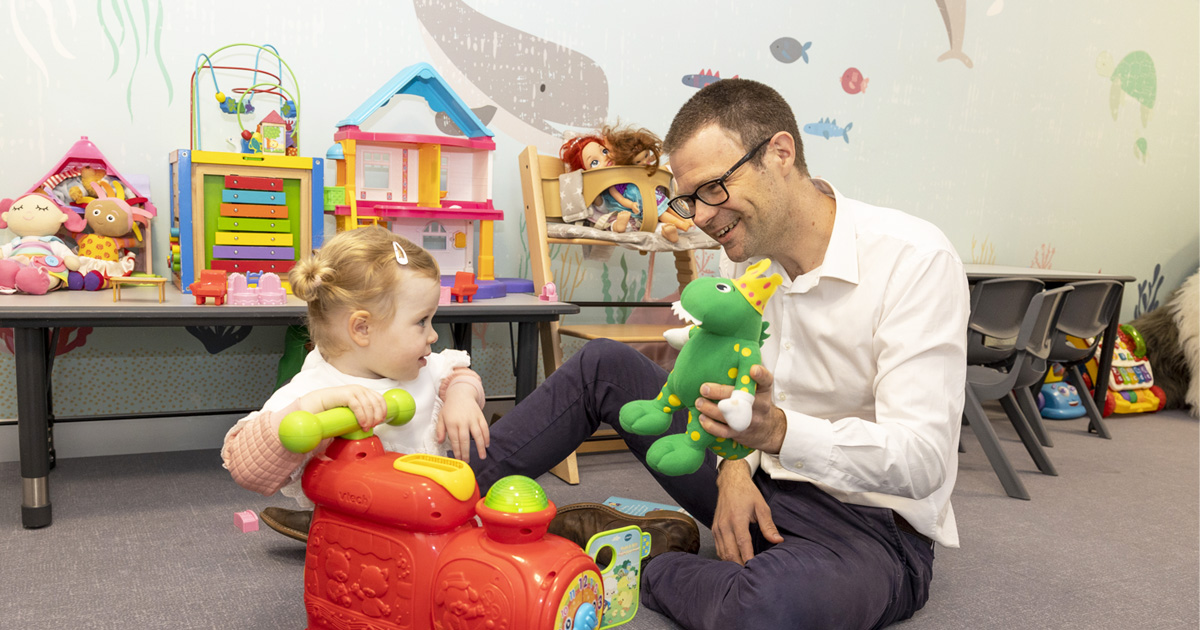
The Kids Research Institute Australia welcomes today’s Federal Government announcement of a new pilot program to support babies showing early social communication differences in Western Australia.

New research evaluating the potential cost savings of a therapy for babies displaying early autism signs has predicted a three dollar return to Australia’s National Disability Insurance Scheme (NDIS) for every dollar invested in therapy.
Autistic adolescents are vulnerable to sleep difficulties, with up to 80 % experiencing sleep problems, most commonly insomnia. Little is known about how autistic adolescents are involved in their own sleep treatment, and their depth of knowledge about their sleep difficulties. The aims of this study were to investigate autistic adolescent and parent perspectives of experiencing and managing insomnia, and what factors influence the development of these perspectives on insomnia and treatment.
Motor features of autism have long been acknowledged by clinicians, researchers, and community stakeholders. Current DSM-5 and ICD-11 guidelines allow clinicians to assign a co-occurring diagnosis of developmental [motor] coordination disorder for autistic individuals with significant motor problems.
The broadening of the clinical definition of autism over time-the so-called, autism spectrum-has run in parallel with the growth of a neurodiversity movement that has reframed the concept of autism entirely. Without a coherent and evidence-based framework through which both of these advances can be situated, the field is at risk of losing definition altogether.
Siblings of individuals with neurodevelopmental conditions (NDCs) have greater incidence of neuropsychiatric diagnoses and neurocognitive difficulties compared to siblings of persons without NDCs. Despite suicidality being labelled a global health crisis (WHO, 2014) and NDC siblings experiencing risk factors implicated in suicidality, no previous studies examined suicidality amongst adolescent and young adult siblings of persons with NDCs. Our study aimed to bridge this gap.
Andrew Videos Whitehouse Watch and listen to Andrew PhD Deputy Director (Research); Angela Wright Bennett Professor of Autism Research at The Kids
Social media allows users to connect with others’ experiences and points of view, with TikTok being the fastest-growing platform worldwide. Highly viewed videos related to neurodiversity on TikTok have an increasing role in understanding and acceptance of neurodivergent individuals.
A comprehensive understanding of specific factors contributing to variability in responsiveness of children with autism to interventions is paramount for making evidence-based clinical and policy decisions. This meta-analysis examined child and family characteristics, as well as intervention design factors, associated with outcomes of behavioral interventions for children with autism.
Andrew Gail Videos Whitehouse Watch and listen to Andrew Alvares PhD PhD Deputy Director (Research); Angela Wright Bennett Professor of Autism