Search
Research
Glucocorticoid resistance in T-lineage acute lymphoblastic leukaemia is associated with a proliferative metabolismWe examined the baseline profile of a panel of T-ALL cell lines to determine factors that contribute to GC resistance without prior drug selection.
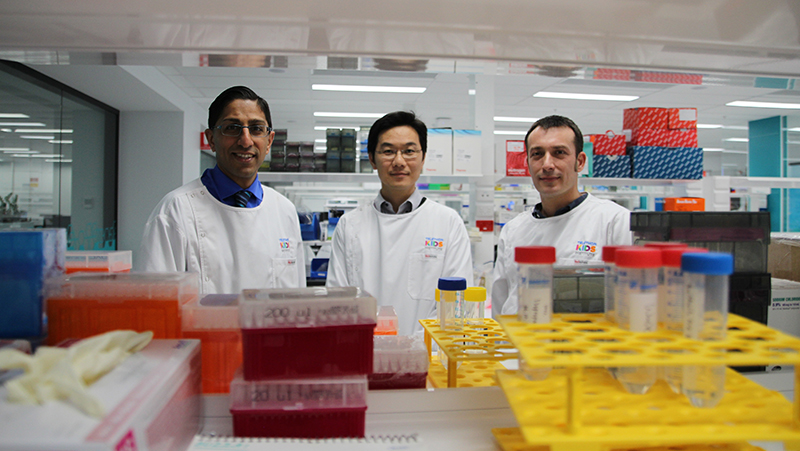
The main aim of our Leukaemia Translational Research Team is to test innovative therapeutic approaches, with a focus on clinical translation of this knowledge, to improve the outcomes of children suffering from leukaemia.
Research
The bone marrow microenvironment of pre-B acute lymphoblastic leukemia at single-cell resolutionThe bone marrow microenvironment plays a key role in leukemia progression, but its molecular complexity in pre-B cell acute lymphoblastic leukemia (B-ALL), the most common cancer in children, remains poorly understood. To gain further insight, we used single-cell RNA sequencing to characterize the kinetics of the murine BMM during B-ALL progression.
Research
Defining the fetal origin of MLL-AF4 infant leukemia highlights specific fatty acid requirementsInfant MLL-AF4-driven acute lymphoblastic leukemia (ALL) is a devastating disease with dismal prognosis. A lack of understanding of the unique biology of this disease, particularly its prenatal origin, has hindered improvement of survival. We perform multiple RNA sequencing experiments on fetal, neonatal, and adult hematopoietic stem and progenitor cells from human and mouse.
Research
Viridans Group Streptococci in Pediatric Leukemia and Stem Cell Transplant: Review of a Risk-stratified Guideline for Empiric Vancomycin in Febrile NeutropeniaViridans group streptococci (VGS) are an important cause of sepsis in immunosuppressed children. We reviewed the effectiveness of risk-stratified addition of vancomycin to empiric febrile neutropenia therapy among 107 children with leukemia or undergoing an allogeneic transplant.
Research
Therapeutic targeting of the leukaemia microenvironmentIn recent decades, the conduct of uniform prospective clinical trials has led to improved remission rates and survival for patients with acute myeloid leukaemia and acute lymphoblastic leukaemia. However, high-risk patients continue to have inferior outcomes, where chemoresistance and relapse are common due to the survival mechanisms utilised by leukaemic cells.
Research
Preclinical Evaluation of Carfilzomib for Infant KMT2A-Rearranged Acute Lymphoblastic LeukemiaInfants with KMT2A-rearranged B-cell precursor acute lymphoblastic leukemia (ALL) have poor outcomes. There is an urgent need to identify novel agents to improve survival. Proteasome inhibition has emerged as a promising therapeutic strategy for several hematological malignancies. The aim of this study was to determine the preclinical efficacy of the selective proteasome inhibitor carfilzomib, for infants with KMT2A-rearranged ALL.
Research
Preclinical Evaluation of Carfilzomib for Infant KMT2A-Rearranged Acute Lymphoblastic LeukemiaInfants with KMT2A-rearranged B-cell precursor acute lymphoblastic leukemia (ALL) have poor outcomes. There is an urgent need to identify novel agents to improve survival. Proteasome inhibition has emerged as a promising therapeutic strategy for several hematological malignancies. The aim of this study was to determine the preclinical efficacy of the selective proteasome inhibitor carfilzomib, for infants with KMT2A-rearranged ALL.
Research
ADR3, a next generation i-body to human RANKL, inhibits osteoclast formation and bone resorptionOsteoporosis is a chronic skeletal condition characterized by low bone mass and deteriorated microarchitecture of bone tissue and puts tens of millions of people at high risk of fractures. New therapeutic agents like i-bodies, a class of next-generation single-domain antibodies, are needed to overcome some limitations of conventional treatments.
Research
Pre-Clinical Evaluation of the Hypomethylating Agent Decitabine for the Treatment of T-Cell Lymphoblastic LymphomaT-cell lymphoblastic lymphoma (T-LBL) is a rare and aggressive lymphatic cancer, often diagnosed at a young age. Patients are treated with intensive chemotherapy, potentially followed by a hematopoietic stem cell transplantation. Although prognosis of T-LBL has improved with intensified treatment protocols, they are associated with side effects and 10-20% of patients still die from relapsed or refractory disease. Given this, the search toward less toxic anti-lymphoma therapies is ongoing.